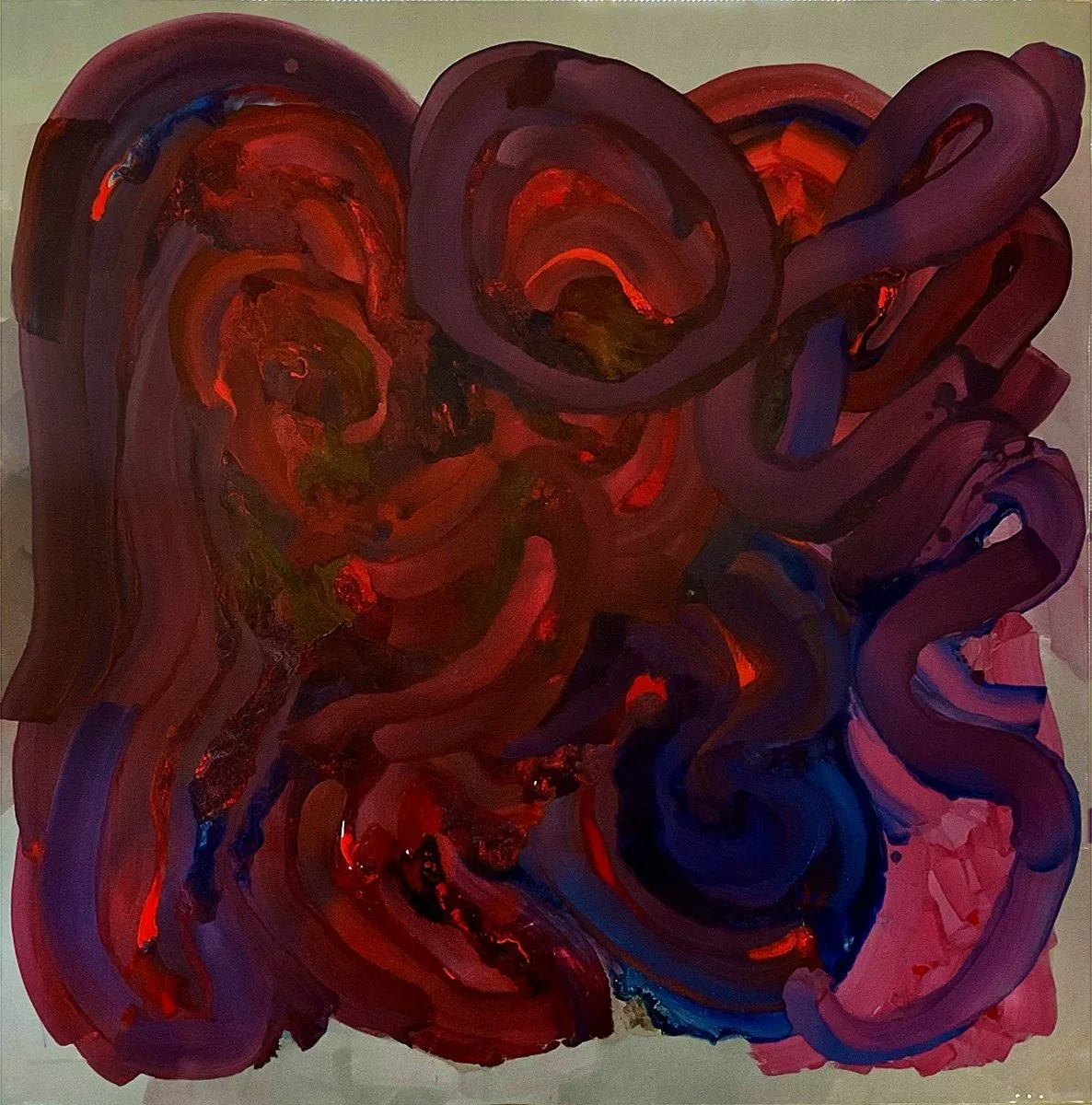
DNA on Fire: The Burning Code of Transformation declines to render its subject as spectacle. The title is a provocation, a thesis, almost a dare, and the painting responds not by illustrating it but by pressing the conceptual pressure inward until whatever once looked like a double helix, if it ever did, has surrendered to something prior to naming.
The work refuses legibility as a point of principle, and the Abstraction Quotient of 4.5 explains why: it sits at the far edge of near-total abstraction, where the escape from the recognizable is nearly complete. Read against the restrained Texture and Form scores of 1, that refusal becomes structural rather than decorative. The color range, scored at 2, keeps the palette disciplined, so the Molten Red, Electric Yellow, and Vibrant Blue do not compete. They cohere into a chromatic argument that the Mood score of 4 tips bright without tipping triumphant.
Against the Ephemeral Atmosphere collection, this work is among the most conceptually leveraged. Its cost is real: a viewer who needs the genetic metaphor anchored will find little purchase. What it risks is the cold side of rigor. What it refuses to do, finally, is comfort.
Longing
molten helix ancient becoming ignited
STANDING THERE
You stand before something that was always burning inside you but had no name until this moment.
WHAT LINGERS
The fire does not destroy here — it clarifies, stripping false layers until only the original, luminous self remains.
WHO IT FINDS
Something in you recognizes this flame as the exact temperature of your own becoming.
Where it lives
- LIGHT
- Natural light transforms this work — morning and evening light read differently
- MINIMUM CEILING
- 8 ft
- MINIMUM WALL
- 5 ft
- DAYLIGHT
- Works beautifully near glass — the palette was built for cha