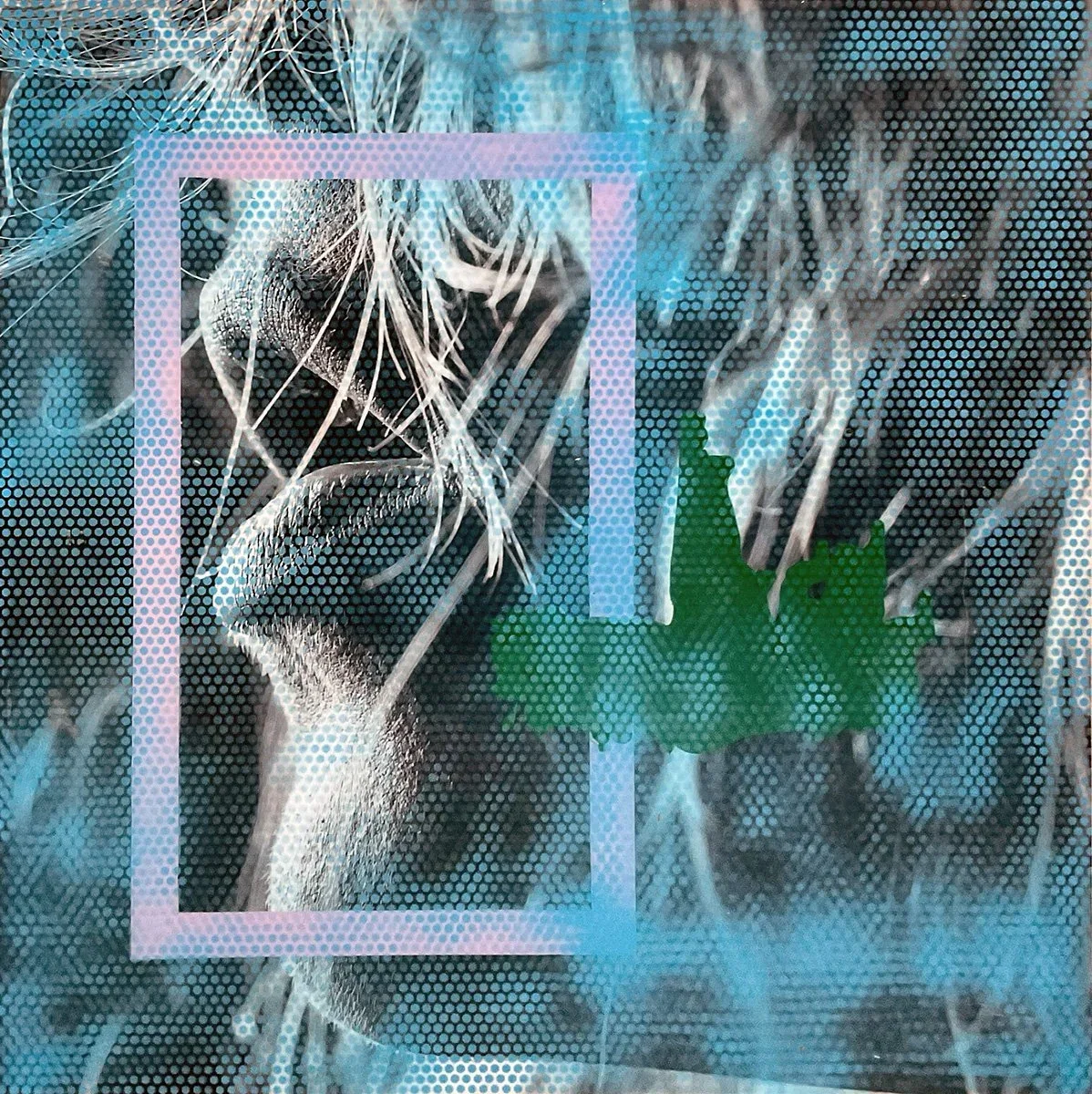
Focus holds its subject close, closer than most works in this collection will allow. The legible world has not been abandoned here; it has been turned inward, made the site of inquiry rather than depiction. What the painting organizes is not a scene but an act: the act of looking, rendered as structure.
At an Abstraction Quotient of -3, the subject remains nameable, and that legibility is doing real labor. Form scores high, at 4, which means the painting's architecture is deliberate, its edges reasoned rather than dissolved. Color Range at 3 is moderate, and the palette confirms it: indigo and black anchoring, cream and soft blue offering intervals of relief, muted red arriving as the single tonal pressure. These dimensions work together to make focus feel like a discipline imposed on material that resists it, a negotiation, not a resolution.
The risk Focus takes is restraint. By keeping the recognizable intact, it forgoes the freedom other works in this catalog claim at higher quotient values, trading that freedom for precision. What it refuses is spectacle. Against the more dissolved paintings surrounding it, Focus reads as argument: that the recognizable, when pressed, can carry as much weight as the abstract. Whether that argument fully lands is the question the catalog puts to it.
Tenderness
vast interior quietly expanding threshold
STANDING THERE
You stand at the edge of something enormous that has no edge.
WHAT LINGERS
The feeling that paying attention to one thing opens a door to everything else, and the door cannot be closed again.
WHO IT FINDS
A map drawn from the inside out, where the territory keeps growing the longer you look.
Where it lives
- LIGHT
- Natural light preferred — oil layers shift through the day
- MINIMUM CEILING
- 9 ft
- MINIMUM WALL
- 8 ft
- DAYLIGHT
- Natural light from nearby glass enhances layering — flexible