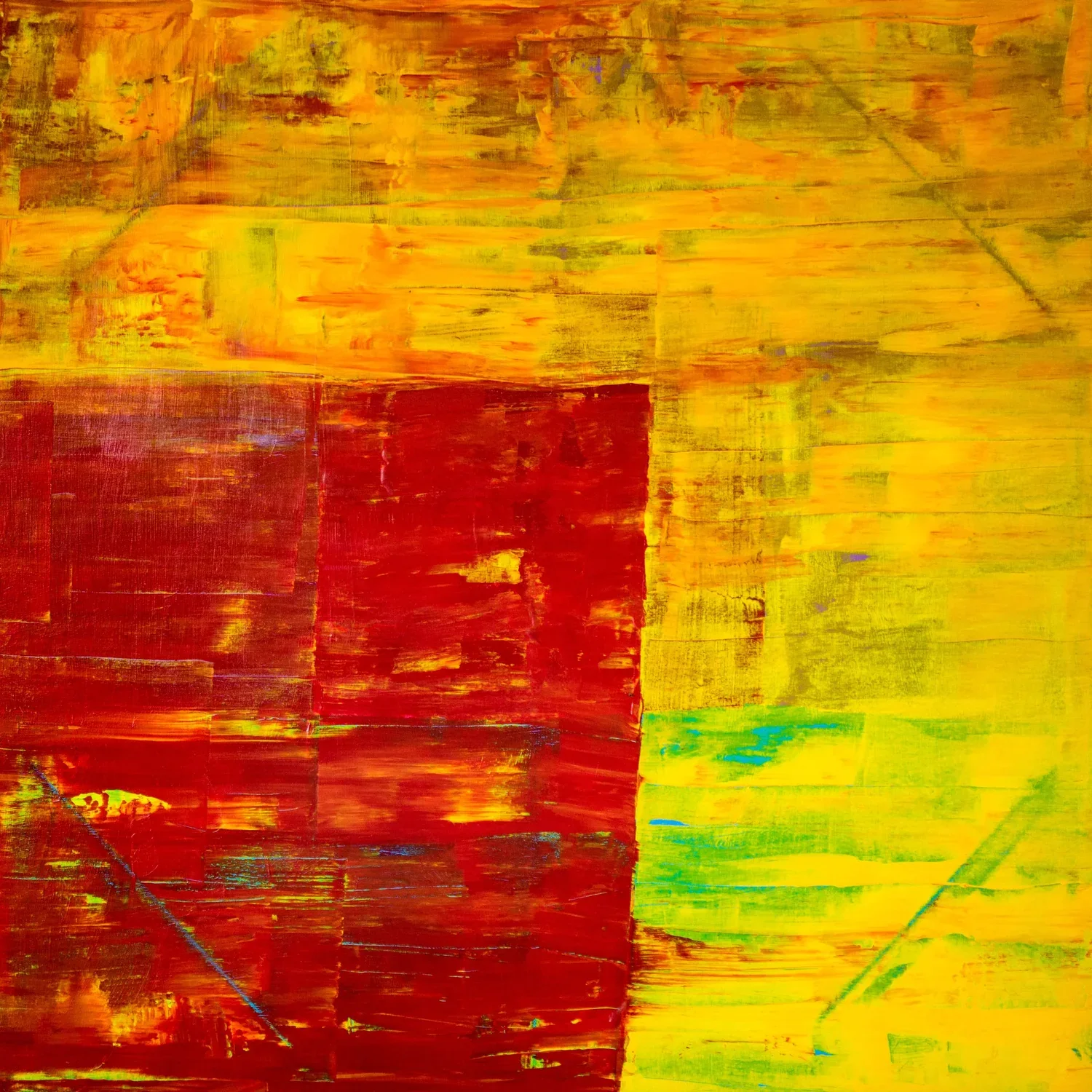
Jaisalmer Royal Wedding holds a subject that is still partly legible: ceremony, gold, the Thar desert's particular quality of light. Yet the painting does not illustrate these things so much as hold their residue, the way a room holds warmth after a fire has been allowed to go out. The title offers orientation, and the palette confirms it, but the image itself is already moving away from the event it names.
Where Form and Color Range meet at the same moderate intensity, each prevents the other from dominating: form does not become architecture and color does not become symbol. They negotiate, and the negotiation produces atmosphere rather than depiction. Mood, scored at its ceiling, tips the whole structure toward the celebratory, but the Abstraction Quotient of 1.5 keeps the painting anchored, just barely, to something that once had a name.
The risk here is sentimentality, which the measured abstraction largely forestalls. What the work refuses is full dissolution, and that refusal is a considered position. In a catalog that reaches toward pure abstraction elsewhere, this painting occupies the threshold deliberately, which is either its most interesting quality or its most cautious one.
Reverence
gold dust suspended breath threshold silk dissolving
STANDING THERE
You are standing at the exact moment ceremony becomes memory, before either has fully decided what it is.
WHAT LINGERS
The warm palette holds something the eye cannot keep, color behaving like incense, present then shapeless.
WHO IT FINDS
The painting finds the hush the bride herself must have felt, not photographed but translated into pigment that still trembles.
Where it lives
- LIGHT
- Natural light transforms this work — morning and evening light read differently
- MINIMUM CEILING
- 9 ft
- MINIMUM WALL
- 8 ft
- DAYLIGHT
- Works beautifully near glass — the palette was built for cha