Authority Magazine asked me, for its series C-Suite Perspectives on AI, where I use AI in my work and where I rely only on people. In ArtGraph a model drafts readings of more than 250 paintings. The hard part was never getting it to produce something. It produces something every time, fluently. The hard part is that fluent and right look the same until a person who knows the painting reads it.
The model drafts; I correct and sign. Every reading carries a human name. The model is a second reader, never the author.
The heart of the interview was one question: what are the five things to keep in mind when deciding where to use AI and where to rely only on humans? This was my answer. Each one was learned in the studio.
1. Automate the procedure, never the encounter
A machine can converse, but it can’t encounter. When there is a face on the other side of a decision (a hire, a layoff, an apology, a client who is frightened), the moment itself is the work, and no summary of it is the same thing. I learned this in the studio: a painting can be described a thousand ways, but it only does its work when someone stands in front of it. Before you automate a step, ask whether the person on the other side needs to be met, not just answered.
2. Your unease is information the model can’t see
Emotion isn’t noise in the system; it is the system telling you what matters. When every number says yes and something in you says wait, that hesitation is data from the only instrument in the room that can feel what’s at stake. In my studio the painting tells me something is wrong before I know why, and the process tells me where. Treat that feeling as the start of an inquiry, not an obstacle to efficiency.
3. Machines live in the present tense. Keep people where time matters
A model has no memory of what it cost to earn a customer’s trust, no history with your team, no stake in what a decision will mean in ten years. People carry time: the past, the present and the consequences. Anything that can’t be undone, or that will shape a relationship for years, needs someone who will still be there to answer for it. In my studio there’s no rollback once the paint dries.
4. Every summary is an abstraction, and someone must own what it leaves out
To abstract is to decide what matters: what to reveal, what to conceal, what to let disappear. When AI condenses a market, a team or a customer into a dashboard, it makes those choices without conscience. Read the summary, then ask the leader’s question: who and what did this leave out? The model chose what to show you. You choose what it means.
5. Protect the space between order and chaos
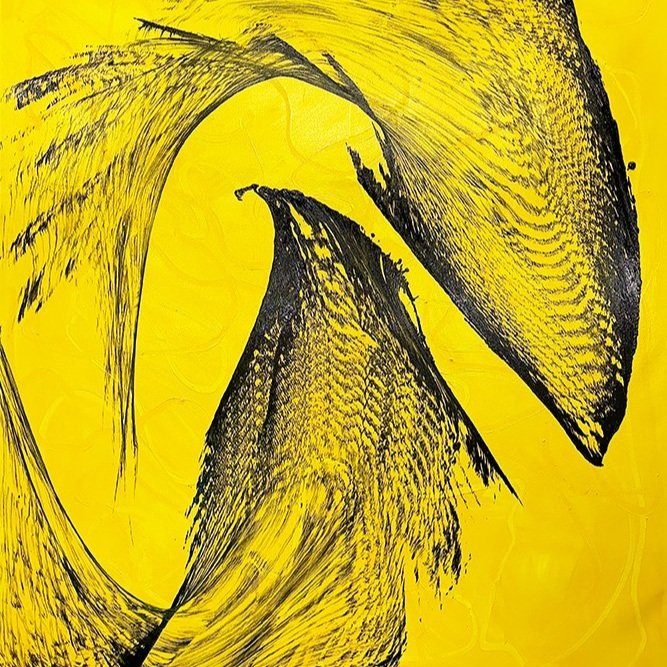
Everything new begins in the tension between structure and freedom: a disciplined plan meeting the impulse that breaks it. AI can give you perfect order or endless variation, but it can’t feel that tension or stand at the edge of the unknown. If you optimize every uncertainty away, you also remove the place where something new can begin. Some of my best paintings came from a line I didn’t plan and chose to keep.
Underneath all five
Underneath all five is the conviction my book is built on: machines don’t threaten what makes us human; forgetting ourselves does. One practice keeps me honest. Before I open the machine’s answer, I write down my own. Later I can tell which one was mine, and I catch the times the model talked me out of something I already had right.
The model chose what to show you. You choose what it means.
Read the full interview in Authority Magazine: C-Suite Perspectives On AI: Ritu Raj Of ArtGraph On Where to Use AI and Where to Rely Only on Humans.
Ritu Raj is a painter, author and entrepreneur based in Phoenix, Arizona. He founded Avasta and Wag Hotels, helped build SideCar and Diamond Foundry, and created ArtGraph. These five answers first appeared in his interview with Authority Magazine, published 19 November 2026. Like his books, they were written in open conversation with AI models, with the ideas and the values his own.