In the studio I watch people meet a painting. Some lean in. They step closer, then back, then closer again, and ten minutes later they are still there, still not sure what they are looking at and in no hurry to be sure. Others give it a few seconds, look for something they can name, don’t find it, and move on to the next wall. I used to think the second group simply didn’t like abstract art. I don’t think that any more. I think they have a different tolerance for abstraction.
By tolerance for abstraction I mean, in plain words, where you are comfortable. At one end are paintings close to realism, where you can still say what you are looking at. At the other end is abstraction that cannot be described in language at all. Somewhere along that line each of us has a place where we feel at home, and a point past which we start to feel lost. That place is your tolerance for abstraction. It is not taste, and it is not how clever you are. And it can move.
The painting has a quotient. The viewer has a tolerance. The encounter is what happens between them.
Two sides of one meeting
When I built ArtGraph, one of the six things it reads in a painting is what I call the Abstraction Quotient: how far the painting has travelled from what language can name. A painting near the border still gives you something to hold, a window, a figure, a leaf. Further out, there is nothing left that a word can settle for you, only color, edge, surface and the space between them.
For a long time I talked about that distance as if it belonged only to the painting. Then I kept noticing the same thing in people. I have seen people who can take a vast amount of abstraction, where there is no language and no tie to the world at all. And I have seen people who are happiest with a slight amount, like Picasso’s Cubism, where you can still find a face or a bottle, but the painting has heightened it, given it more than one way to turn. Neither is wrong. They are standing at different distances from the same edge.
So the quotient belongs to the painting, and the tolerance belongs to the person. What happens when the two meet is the encounter, and that is what ArtGraph is built to record.
A ladder of five paintings
Here is a way to find your own edge. These are five of my paintings, from the nearly nameable to the almost wordless. Look at each one for longer than feels necessary. Notice where you stop wanting to stay, and where you start reaching for a word you can’t find.
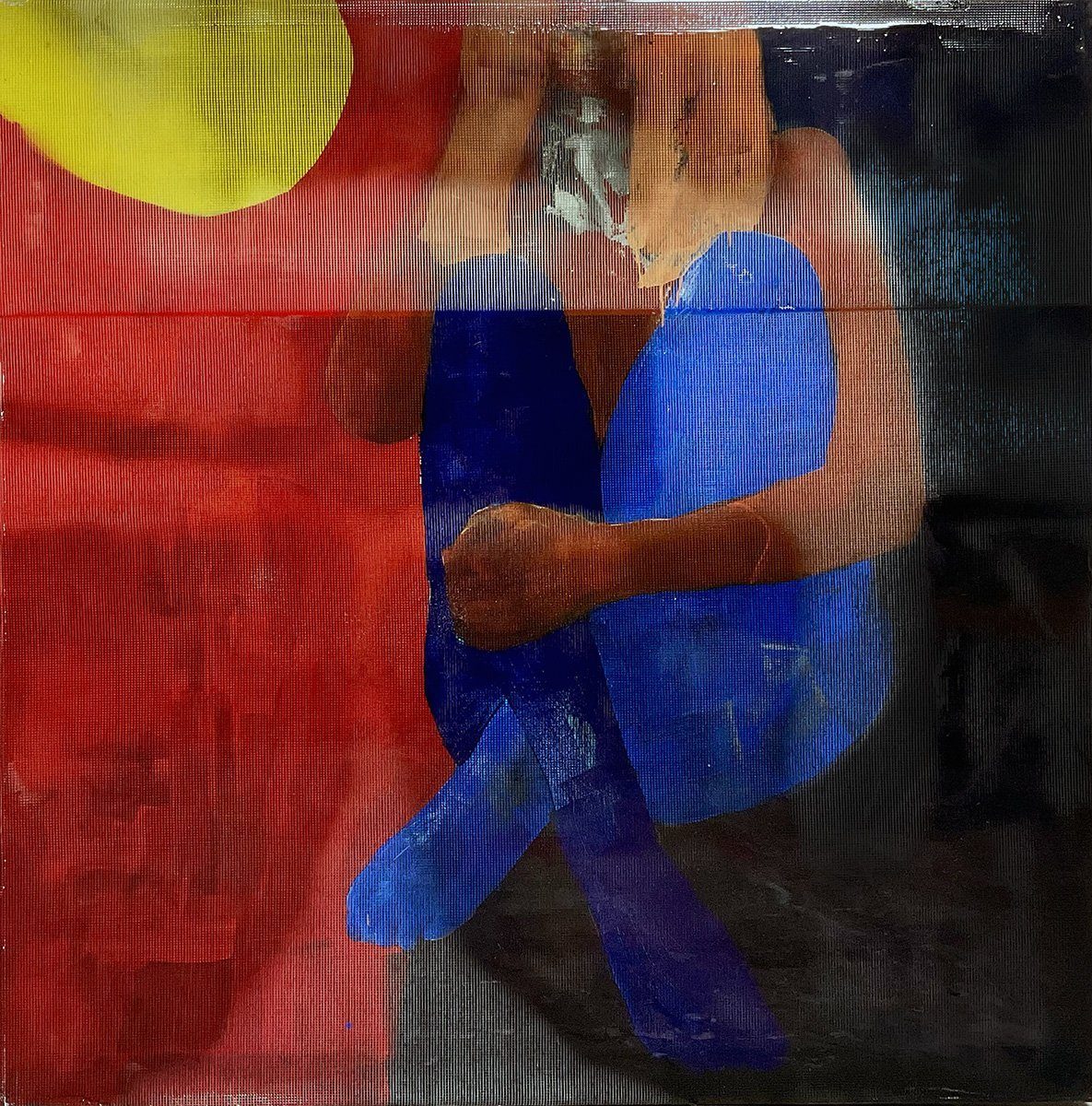
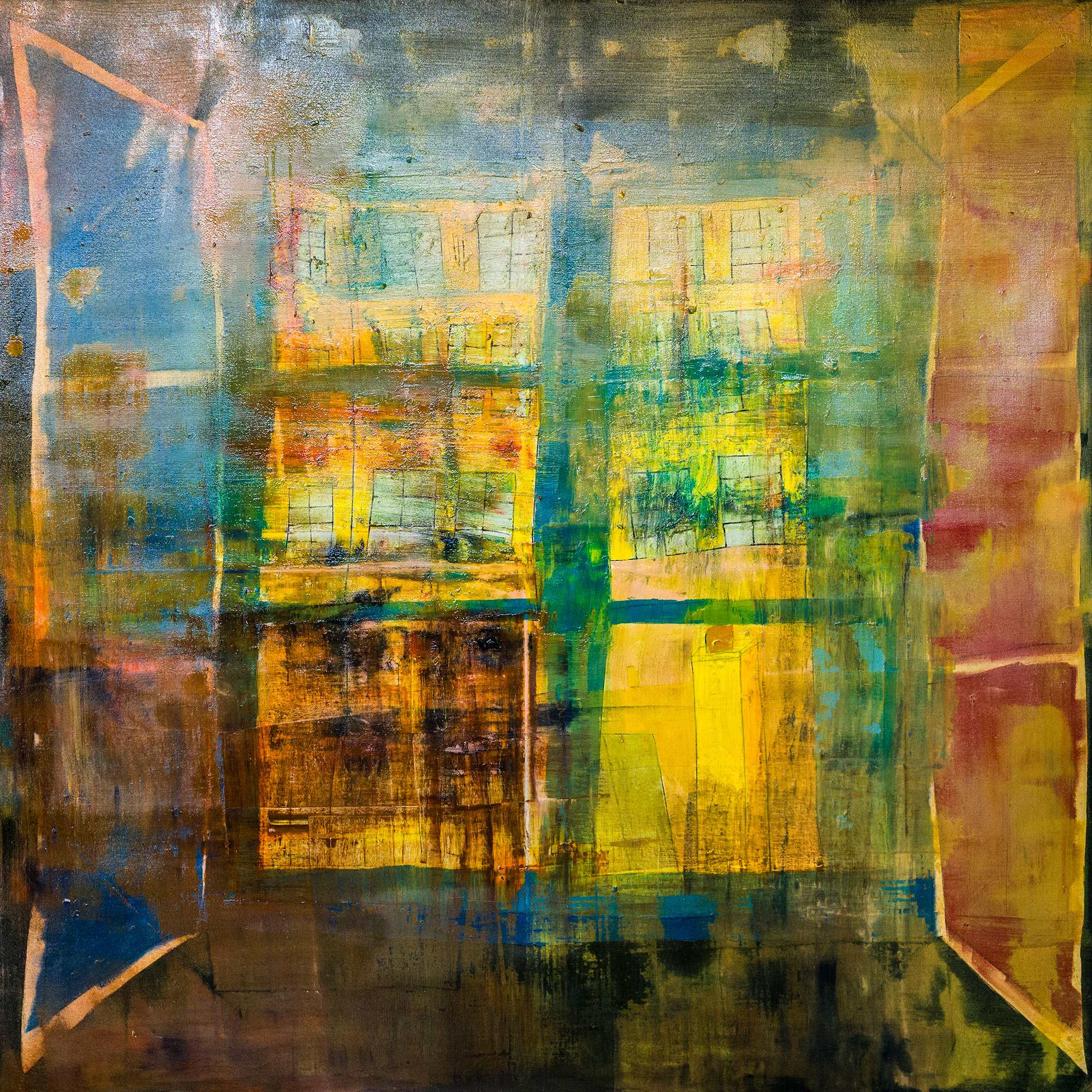
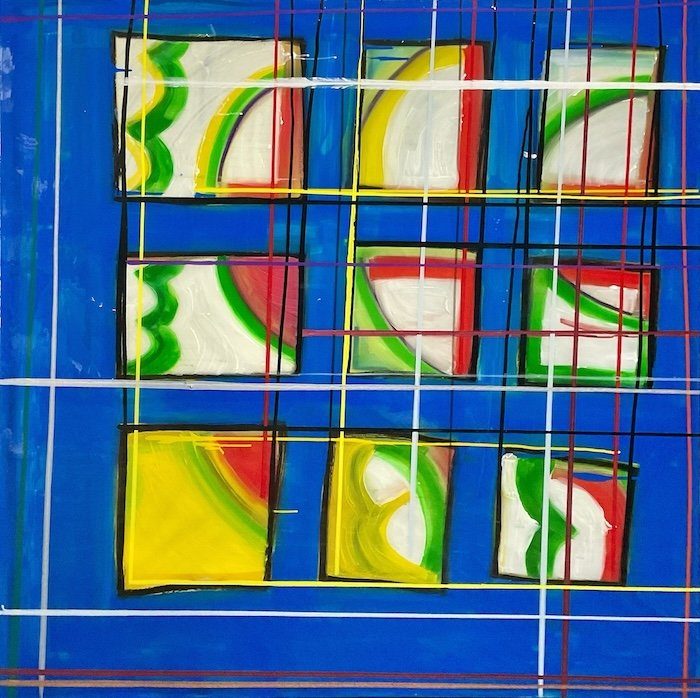
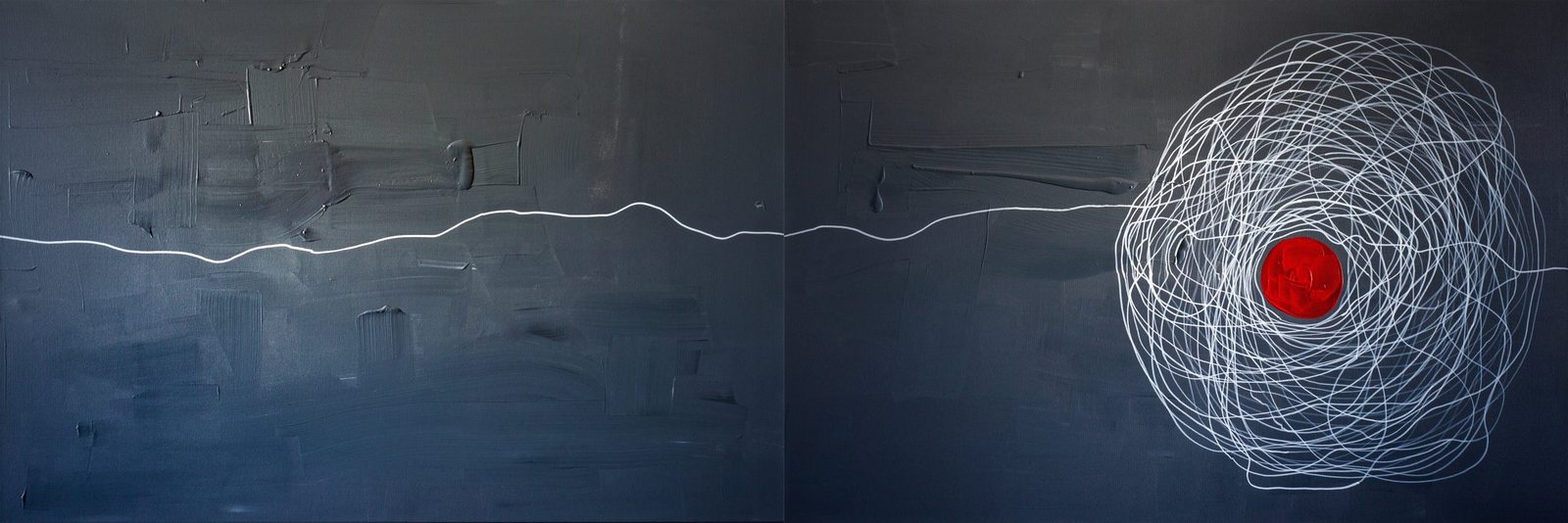
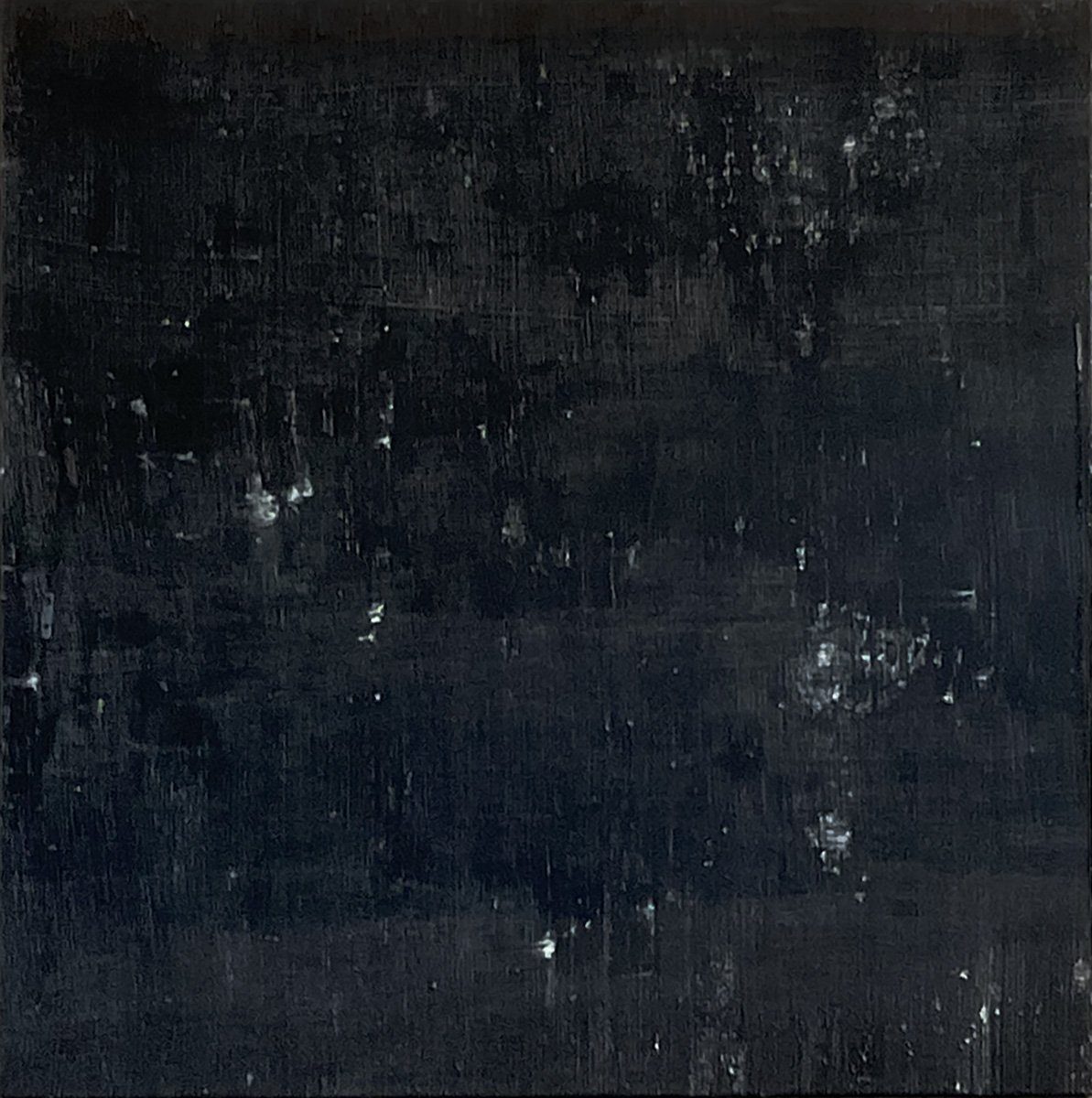
Where you stopped is your tolerance for abstraction today. Not for ever, and not as a grade. The first painting is not a lesser painting than the last one, and the person who loves it is not a lesser viewer. A slight abstraction can be the deepest one in the room for the person standing in front of it.
It is not a fixed trait
Psychologists have a phrase for something close to this, tolerance for ambiguity: how comfortable a person is with what is unclear or unfinished. The poet John Keats had an older name. In a letter of 1817 he praised what he called negative capability, being “capable of being in uncertainties, mysteries, doubts” without reaching too quickly for an answer. Researchers at the University of Bamberg who showed ambiguous modern paintings to untrained viewers found that people often liked a work more the more ambiguous they found it, and that solving it had little to do with enjoying it. A painting is not a riddle. Nobody is waiting at the end with the answer.
What I have seen in the studio is that tolerance for abstraction moves. It grows the way any stamina grows, by staying a little longer than is comfortable, and then a little longer again. I have watched someone who walked straight past a painting on their first visit come back a year later and stand in front of it for twenty minutes. The painting hadn’t changed. They had.
It can also shrink. We live in a world built to make life comfortable, and much of it is designed to give us more of what we already like, quickly, before we have time to feel unsure. Every feed is tuned to remove the moment of not knowing. That is useful for a great many things. But a capacity we never use gets weaker, and the capacity to stay with what we can’t yet name is one of them. I think that is part of why abstract painting matters now. It is one of the few places left where nothing is optimized for you, where you have to bring your own attention and find out what it can do.
What it is for
I don’t think tolerance for abstraction stays in the gallery. The same capacity lets you sit across a table from someone you love and let them finish a thought you were sure you had already understood. It lets you hold a decision open a day longer when every number says yes and something in you says wait. A relationship is abstract in exactly this way: there is nothing you can put on the table and point to as the friendship, only what happens between two people, which neither of them can fully name.
A painting is a good place to practise, because it is patient. It doesn’t mind if you stay. It doesn’t need you to reach a conclusion before you leave. You can come back to it tomorrow, or in a year, and find that you can stay a little longer than you could before.
Where did you stop? Go back to that painting, and stay one minute more.
When you find a painting that holds you, you can record the moment with an EncounterGraph and send it to someone who knows you. The Concierge can show you paintings near your edge, and one step beyond it.
Ritu Raj is a painter, author and entrepreneur based in Phoenix, Arizona, and the creator of ArtGraph, a language system for sharing an encounter with abstract art. His books are The Shape of Seeing and The Unalgorithmic Self. Like his books, this essay was written in open conversation with AI models, with the ideas and the paintings his own.